Wednesday, November 24, 2010

Who Is Your Lord ? - Answers To Most Common Questions About God .

0
BILAL PHILIPS
In this video Dr. Bilal Philips raises a few questions which
we can use to judge to what degree do we know who our Lord is.

1. Do you agree with those who say that belief is a matter of blind faith ?
2. If everything has a Creator then who created God? 
3. If God can do anything, why can't He have a son? 
4. If God is all-powerful, can He create a stone which is too heavy for Him to lift ? 
5. If God is all-good and He is able to do all things then where
did evil come from?
Dr. Bilal Philips will address these questions and clear the
many false ideas and misconceptions many people have
when it comes to their Lord .

The Translations of the meaning of the Holy Quran in 31 Language (Torrent)

 
The Quran, the last revealed word of God, is the primary source
of every Muslims faith and practice. It deals with all the
subjects which concern human beings: wisdom, doctrine,
worship , transactions, law, etc., but its basic theme is the
relationship between God and His creatures. At the same time,
it provides guidelines and detailed teachings for a just society,
proper human conduct, and an equitable economic system.


 Note that the Quran was revealed to Muhammad(PBUH) in Arabic only.
So, any Quranic translation, either in English or any other
language, is neither a Quran, nor a version of the Quran,
but rather it is only a translation of the meaning of the Quran.
The Quran exists only in the Arabic in which it was revealed.

These are the translations of the meaning of the Quran
in 31 languages choose your language , start downloading ,
read , and enjoy..

>CENTER OF TRUTH MESSAGE<

Click Here To Download(Torrent) [1.1GB]

Saturday, November 20, 2010

Islam - The Fastest Growing Religion

0
"Say, O Muhammad (Sallallaahu 'Alaihi Wa Salam): This is my way, I call to Allaah (i.e. to the testification that none has the right to be worshipped except God, alone, with no partner) upon certain knowledge - I, and those who follow me. I declare Allaah free and far removed from all that they associate as partners with Him, and I am free of those who worship anything else along with Him. [Al-Qur'aan; 12.108]"

~ THERE CAN ONLY BE ONE TRUTH! ~

Tuesday, November 16, 2010

Eid ul Adha Mubarak from C.O.T.M

0


Remember in your DUA

{ CENTER OF TRUTH MESSAGE (C.O.T.M) }

A History of Hajj (Pilgrimage)

H A J J
Hajj literally means 'to set out for a place'. Islamically however it refers to the annual pilgrimage that Muslims make to Makkah with the intention of performing certain religious rites in accordance with the method prescribed by the Prophet Muhammad (saws).

Hajj and its rites were first ordained by Allaah in the time of the Prophet lbraaheem [Abraham] (AS) and he was the one who was entrusted by Allaah to build the Ka'ba - the House of Allaah - along with his son Ismaa'eel [Ishmael] at Makkah. Allaah described the Ka'ba and its building as follows:
"And remember when We showed Ibraaheem the site of the [Sacred] House [saying]: Associate not anything [in worshipi with Me and purify My House for those who circumambulate it [i.e. perform tawaaf] and those who stand up for prayer and those who bow down and make prostration [in prayer etc.]."
[Surah Al-Hajj 22:26]
After building the Ka'ba, Ibraaheem (AS) would come to Makkah to perform Hajj every year, and after his death, this practice was continued by his son. However, gradually with the passage of time, both the form and the goal of the Hajj rites were changed. As idolatry spread throughout Arabia, the Ka'ba lost its purity and idols were placed inside it. Its walls became covered with poems and paintings, including one of Jesus and his mother Maryam and eventually over 360 idols came to be placed around the Ka'ba.

During the Hajj period itself, the atmosphere around the sacred precincts of the Ka'ba was like a circus. Men and women would go round the Ka'ba naked, arguing that they should present themselves before Allaah in the same condition they were born. Their prayer became devoid of all sincere remembrance of Allaah and was instead reduced to a series of hand clapping, whistling and the blowing of horns. Even the talbeeyah [1] was distorted by them with the following additions: 'No one is Your partner except one who is permitted by you. You are his Master and the Master of what he possesses'.

Sacrifices were also made in the name of God. However, the blood of the sacrificed animals was poured onto the walls of the Ka'ba and the flesh was hung from pillars around the Ka'ba, in the belief that Allaah demanded the flesh and blood of these animals.
Singing, drinking, adultery and other acts of immorality was rife amongst the pilgrims and the poetry competitions, which were held, were a major part of the whole Hajj event. In these competitions, poets would praise the bravery and splendour of their own tribesmen and tell exaggerated tales of the cowardice and miserliness of other tribes. Competitions in generosity were also staged where the chief of each tribe would set up huge cauldrons and feed the pilgrims, only so that they could become well-known for their extreme generosity.

Thus the people had totally abandoned the teachings of their forefather and leader Ibraaheem (AS). The House that he had made pure for the worship of Allaah alone, had been totally desecrated by the pagans and the rites which he had established were completely distorted by them. This sad state of affairs continued for nearly two and a half thousand years. But then after this long period, the time came for the supplication of Ibraaheem to be answered:
"Our Lord! Send amongst them a Messenger of their own, who shall recite unto them your aayaat (verses) and instruct them in the book and the Wisdom and sanctify them. Verily you are the 'Azeezul-Hakeem [the All-Mighty, the All-Wise]."
[Surah Al-Baqarah 2:129]
Sure enough, a man by the name of Muhammad ibn 'Abdullaah (SAWS) was born in the very city that Ibraaheem (AS) had made this supplication centuries earlier. For twenty-three years, the Prophet Muhammad (SAWS) spread the message of Tawheed [true monotheism] - the same message that Ibraaheem and alI the other Prophets came with - and established the law of Allaah upon the land. He expended every effort into making the word of Allaah supreme and his victory over falsehood culminated in the smashing of the idols inside the Ka'ba which once again became the universal centre for the worshippers of the one True God.

Not only did the Prophet rid the Ka'ba of all its impurities, but he also reinstated all the rites of Hajj which were established by Allaah's Permission, in the time of Ibraaheem (AS). Specific injunctions in the Qur'aan were revealed in order to eliminate all the false rites which had become rampant in the pre-Islamic period. All indecent and shameful acts were strictly banned in Allaah's statement:
"There is to be no lewdness nor wrangles during Hajj."
[Surah al-Baqarah 2:197]
Competitions among poets in the exaltations of their forefathers and their tribesmen's' achievements were all stopped. Instead, Allaah told them:
"And when you have completed your rites [of Hajj] then remember Allah as you remember your forefathers; nay with a more vigorous remembrance."
[Surah al-Baqarah 2:200]
Competitions in generosity were also prohibited. Of course, the feeding of the poor pilgrims was still encouraged as this was done in the time of Ibraaheem (AS) but Allaah commanded that the slaughtering of the animals which was done for this purpose should be done seeking the pleasure of Allaah rather than fame and the praise of the people. He said:
"So mention the name of Allaah over these animals when they are drawn up in lines. Then, when they are drawn on their sides [after the slaughter], eat thereof and feed the beggar who does not ask, and the beggar who asks."
[Surah al-Hajj 22:36]
As for the deplorable practice of spattering blood of the sacrificed animals on the walls of the Ka'ba and hanging their flesh on alters, then Allaah clearly informed them that:
"It is neither their meat nor their blood that reaches Allaah, but it is Taqwaa (piety) from you that reaches Him."
[Surah al-Hajj 22:37]
The Prophet (SAWS) also put a stop to the practice of circling the Ka'ba in a state of nudity and the argument that the pagans put forward to justify this ritual was sharply rebutted in Allaah's question:
"Say: Who has forbidden the adornment [i.e. clothes] given by Allaah which He has produced for His Slaves?"
[Surah al-A'raaf 7:32]
Another custom which was prohibited through the Qur'aan was that of setting off for Hajj without taking any provisions for the journey. In the pre-Islamic period, some people who claimed to be mutawakkiloon (those having complete trust in Allaah) would travel to perform Hajj begging food the whole journey. They considered this form of behaviour a sign of piety and an indication of how much faith they had in Allaah. However Allaah told mankind that to have sufficient provisions for the journey was one of the preconditions for making Hajj. He said:
"And take a provision [with you] for the journey, but the best provision is at-Taqwaa (piety)."
[Surah al-Baqarah 2:197]
In this way, all the pre-Islamic practices, which were based in ignorance, were abolished and Hajj was once more made a model of piety, fear of Allaah, purity, simplicity and austerity. Now, when the pilgrims reached the Ka'ba, they no longer found the carnivals and the frolic and frivolity that had once occupied the minds of the pilgrims there before. Now, there was the remembrance of Allaah at every step and every action and every sacrifice was devoted to Him alone. It was this kind of Hajj that was worthy of the reward of paradise, as the Prophet (SAWS) said: "The reward for an accepted Hajj is nothing less than paradise." [2]

May Allaah grant us all the ability to visit His House and perform the Hajj in the manner of the Prophet Muhammad (SAWS). Aameen.

Footnotes:
1 Labbaik Allaahumma labbaik... (Here I am present, O' Allaah, I am present...) This is the chant which the pilgrims say when they are going around the Ka'ba.
2 Saheeh al-Bukhaaree (Eng. trans. Vol. 3 p. 1 no 1)

Monday, October 18, 2010

The Three Questions In Your Grave!


If the son of Adam died, his soul departs his body and he placed in his grave. Then two angels (Munkar & Nakir) came to him and ask him what he used to believe in when he was alive in this world (dunya). They ask him: 1) who was his Lord, 2) what was his religion, 3) who was his Prophet. If he gives a good answer, that is good, but if he does not answer them they inflict a severe and painful beating on him.

It was narrated that al-Bara’ (may Allaah be pleased with him) said: We went out with the Messenger of Allaah (peace and blessings of Allaah be upon him) for the funeral of a man from among the Ansaar. We came to the grave and when (the deceased) was placed in the lahd, the Messenger of Allaah (peace and blessings of Allaah be upon him) sat down and we sat around him, as if there were birds on our heads (i.e., quiet and still). In his hand he had a stick with which he was scratching the ground.

Then he raised his head and said, “Seek refuge with Allaah from the torment of the grave”, two or three times. Then he said, “When the believing slave is about to depart this world and enter the Hereafter, there come down to him from heaven angels with white faces like the sun, and they sit around him as far as the eye can see. They bring with them shrouds from Paradise and perfumes from Paradise. Then the Angel of Death comes and sits by his head, and he says, ‘O good soul, come forth to forgiveness from Allaah and His pleasure.’ Then it comes out easily like a drop of water from the the mouth of a waterskin. When he seizes it, they do not leave it in his hand for an instant before they take it and put it in that shroud with that perfume, and there comes from it a fragrance like the finest musk on the face of the earth.

Then they ascend and they do not pass by any group of angels but they say, ‘Who is this good soul?’ and they say, ‘It is So and so the son of So and so, calling him by the best names by which he was known in this world, until they reach the lowest heaven. They ask for it to be opened to them and it is opened, and (the soul) is welcomed and accompanied to the next heaven by those who are closest to Allaah, until they reach the seventh heaven. Then Allaah says: ‘Record the book of My slave in ‘Illiyoon in the seventh heaven, and return him to the earth, for from it I created them, to it I will return them and from it I will bring them forth once again.’ So his soul is returned to his body and there come to him two angels who make him sit up and they say to him, ‘Who is your Lord?’ He says, ‘Allaah.’ They say, ‘What is your religion?’ He says, ‘My religion is Islam.’ They say, ‘Whtwo is this man who was sent among you?’ He says, ‘He is the Messenger of Allaah (peace and blessings of Allaah be upon him).’ They say, ‘What did you do?’ He says, ‘I read the Book of Allaah and I believed in it.

'Then a voice calls out from heaven, ‘My slave has spoken the truth, so prepare for him a bed from Paradise and clothe him from Paradise, and open for him a gate to Paradise.’ Then there comes to him some of its fragrance, and his grave is made wide, as far as he can see. Then there comes to him a man with a handsome face and handsome clothes, and a good fragrance, who says, ‘Receive the glad tidings that will bring you joy this day.’ He says, ‘Who are you? Your face is a face which brings glad tidings.’ He says, ‘I am your righteous deeds.’ He says, ‘O Lord, hasten the Hour so that I may return to my family and my wealth.

’ But when the disbelieving slave is about to depart this world and enter the Hereafter, there come down to him from heaven angels with black faces, bringing sackcloth, and they sit around him as far as the eye can see. Then the Angel of Death comes and sits by his head, and he says, ‘O evil soul, come forth to the wrath of Allaah and His anger.’ Then his soul disperses inside his body, then comes out cutting the veins and nerves, like a skewer passing through wet wool. When he seizes it, they do not leave it in his hand for an instant before they take it and put it in that sackcloth, and there comes from it a stench like the foulest stench of a dead body on the face of the earth. Then they ascend and they do not pass by any group of angels but they say, ‘Who is this evil soul?’ and they say, ‘It is So and so the son of So and so, calling him by the worst names by which he was known in this world, until they reach the lowest heaven.

They ask for it to be opened to them and it is not opened.” Then the Messenger of Allaah (peace and blessings of Allaah be upon him) recited (interpretation of the meaning):

“for them the gates of heaven will not be opened, and they will not enter Paradise until the camel goes through the eye of the needle” [al-A’raaf 7:40]

He said: “Then Allaah says, ‘Record the book of My slave in Sijjeen in the lowest earth, and return him to the earth, for from it I created them, to it I will return them and from it I will bring them forth once again.’ So his soul is cast down.” Then the Messenger of Allaah (peace and blessings of Allaah be upon him) recited the verse (interpretation of the meaning):

“and whoever assigns partners to Allaah, it is as if he had fallen from the sky, and the birds had snatched him, or the wind had thrown him to a far off place” [al-Hajj 22:31]

He said: “Then his soul is returned to his body, and there come to him two angels who make him sit up and they say to him, ‘Who is your Lord?’ He says, ‘Oh, oh, I don’t know.’ They say, ‘What is your religion?’ He says, ‘Oh, oh, I don’t know.’ Then a voice calls out from heaven, ‘Prepare for him a bed from Hell and clothe him from Hell, and open for him a gate to Hell.’ Then there comes to him some of its heat and hot winds, and his grave is constricted and compresses him until his ribs interlock. Then there comes to him a man with an ugly face and ugly clothes, and a foul stench, who says, ‘Receive the bad news, this is the day that you were promised.’ He says, ‘Who are you? Your face is a face which forebodes evil.’ He says, ‘I am your evil deeds.’ He says, ‘O Lord, do not let the Hour come, do not let the Hour come.’”
Narrated by Abu Dawood, 4753; Ahmad, 18063.

Classed as saheeh by al-Albaani in Saheeh al-Jaami’, 1676.

May Allah guide us to be among those who will answer those three questions in the Grave.

Saturday, October 9, 2010

The Abridgement Of Prophet Prayer


Muhammad Naasiruddeen al-Albaanee | Language: English | Format: PDF | Pages: 48 | Size: 1 MB

The Abridgement of Prophet Prayer: A description of the Prophet’s prayer from beginning to end.

Contents:
- Introduction
- Facing the Ka bah
- Standing (Qiyaam)
- The Intention (An-Niyyah)
- The Takbeer
- The Recitation (Al-Qiraa’ah)
- The Bowing (Rukoo)
- The Prostration (Sujood)
- The Second Rak’ah
- The Tashahhud
- The Third and Fourth Rak’ahs
- The Qunoot in the Witr Prayer
- The Final Tashahhud
- Supplicating Before the Salutation.
- The Salutation and its Types
- Appendix One - Soorah al-Faatihah
- Glossary of Terms

Stories of the Prophets


TITLE : Stories of the Prophets

AUTHOR : Hafiz Ibn Kathir

2.5 MB | PDF | 228 Pages

In this book, the stories of the prophets have been compiled from ‘Al-Bidayah wan-Nihayah’ (The Beginning and the End) which is a great work of the famous Muslim exegete and historian Ibn Kathir and has a prominent place in the Islamic literature. The stories of the prophets and all the events in their lives have been supported by the Qur’anic Verses and the Sunnah (traditions) of the Prophet (S). Wherever it was necessary, other sources have also been reported for the sake of historical accounts, but on such places a comparative study has been made to prove the authenticity of the sources. Ibn Kathir has reproduced the views and interpretations of all the great exegetes of the Qur’an of his time. The systemic narratives of the Stories of the Prophets have been written in chronological order which renders a historical style to the book.

Allah the Most Exalted says in the Qur’an:
* “We are relating unto you the most beautiful of stories in that what We have revealed to you from the Qur’an, though before it you were from among those who were not aware of them.” (12:3)
* “We have indeed sent aforetime Messengers before you, of them there are some whose stories We have related to you, and whose stories We have not related to you…” (40:78 )
* “We relate to you the important news of their story in truth…” (18:13)
* “And all that We relate to you of these stories of the Messengers, We strengthen with them your heart. Through them there come to you the truth as well as admonition and reminder to all those who believe.” (11:120)
* “There is, indeed, in their stories lessons for people endowed with understanding. It is not any invented tale, but a confirmation of what went before it, and a detailed exposition of all things, and a guide and a mercy to the people who believe.” (12:111)
* “…so relate the stories, perhaps they may reflect.” (7:176)


The Choice Islam And Christianity – Volume ( One & Two )


Ahmed Deedat | Language: English | Format: PDF| Pages: 498 | Size: 17 MB
The Choice – Islam and Christianity: Two Volumes, By Ahmed Deedat, An excellent book discussing Islam and Christianity in the light of the Holy Quran and the Sunnah.


The Explanation Of The Beautiful And Perfect Names Of Allah


Abdur-Rahman Bin Nasir as-Sadi | Language: English | Format: PDF | Pages: 35 | Size: 2 MB

The Explanation Of The Beautiful And Perfect Names Of Allah: A brief explanation of some of the Names of Allah.

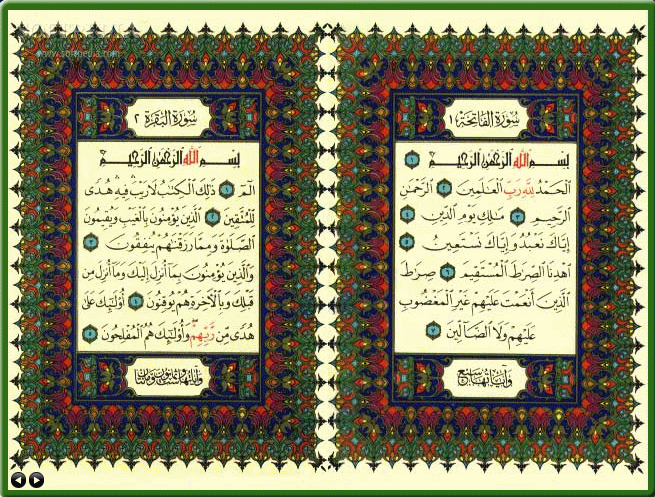
Sample Pages: